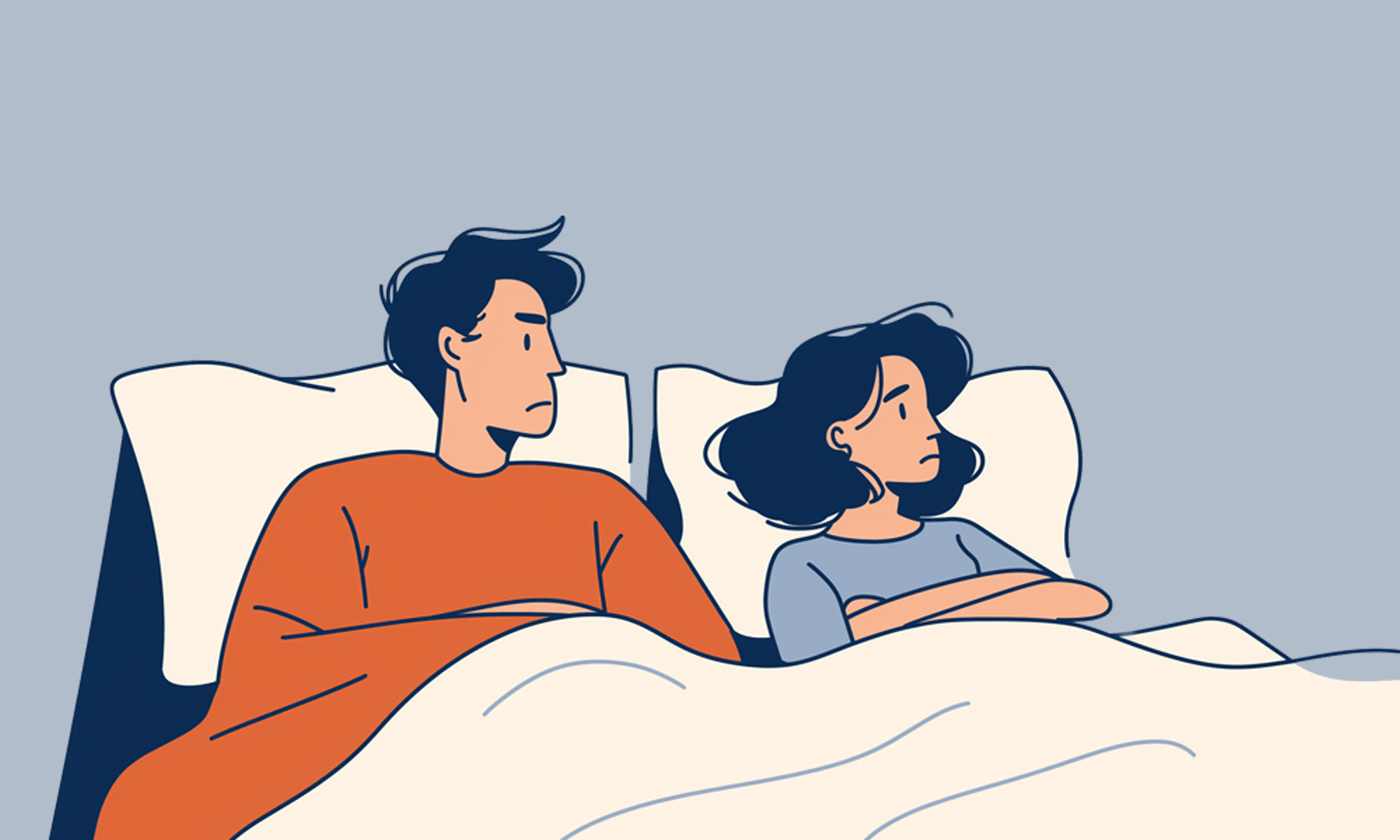
Every time Alan thought about his wife’s past, two words flashed in his mind: damaged goods.
Sitting in my therapy room, Alan looked exhausted and on edge. He said his marriage was hopeless and he was close to giving up. He’d had a bad experience with another therapist. All because of these two words.
“Oh what happened with the therapist?” I was curious to know.
“It was about our sex life – our non-existent sex life” Alan said. “My wife and I haven’t had sex for over two years. So we went to see a couple’s therapist.”
“My wife says she’s got a low libido, low desire” Alan says. “But I know that’s not true.”
Already, I’ve got an idea where this is going. “Because you used to have a sex life?“
“Yes, of sorts. But SHE had much more sex before we met. I know that for a fact. She was up for anything back then” replied Alan.
Alan looks me in the eye. “Meeting men on nights out, bringing them home. I know it all and she doesn’t deny it. I even know who some of them were, we live in a small town. And I hate that, I’ve always hated it. And then she says she’s got a low libido…“
I take advantage of the pause. “So at couple’s therapy…?“
Alan sighed. “I was trying to explain why my wife’s past has always hurt me, why I bring it up when she rejects me. She doesn’t know what it’s like for me. I see another man and I think: was he one of them?“
“I told the therapist. I said I know this is bad, but it’s how it makes me feel. Damaged goods. I’m married to damaged goods.”
I braced myself. “What did the therapist say?“
“She took my wife’s side, of course. She said I was being verbally abusive. I need to realise how my wife feels, hearing that. I know – I hate having to say it. But I think of her with other men and…“
How hurt becomes harsh judgment
Alan is being very honest, but no wonder his marriage is in crisis. This is what retroactive jealousy does. It takes our hurt, and turns it into the harshest possible judgement.
Here’s the thing: Alan is conflicted by these two words, by this idea. It isn’t how he actually sees his wife most of the time. It comes from a place of despair.
Alan described the process. “I get these pictures in my mind of her with other men, vivid, pornographic pictures. And I think about how she is now. There it is: she’s damaged goods. And I just want to avoid her. In bed, I move as far as I can to the other side…“
“I know it’s not fair, for 25 years she’s been faithful to me. I still love her” Alan says. “If only she hadn’t done those things, or if I’d met her before all that…“
Here’s the trick retroactive jealousy is playing on Alan:
He has a story. That’s he’s married to a woman who isn’t attracted to him (this part may be true, it’s possible). And it’s because she went with other men before him. She preferred these other men, she was up for anything with them. These experiences changed her. And now she lies about having a low libido to avoid sex with Alan.
It has a certain logic, this story. But is it evidence-based? Or has he taken two things and connected them in his imagination – his vivid imagination.
The faulty logic of obsessive thinking
We see this a lot with obsessive compulsive thinking. It goes straight for the gut punch: that’s all she is. I’m a chump. I’m the sort of man who marries damaged goods.
Ouch. It’s black and white, it’s all or nothing. We’re wired to have an emotional reaction to thoughts like this. Alan goes into fight or flight.
Because he saw a man of a certain age, across the street? That’s why she doesn’t want sex with him?
Or the other way around. Alan tries to initiate sex with his wife and she turns him down. He thinks of those men, it’s because of them?
It makes sense in the moment. The old story has kicked in, triggered by a man in the street. What if he was one of them? A whoosh of despair and disgust.
The trick is played, the connection is made. Alan retreats to the far side of the bed. Or brings up her past to push her away.
Shame doesn’t resolve retroactive jealousy
I took Alan’s wife’s side too. This talk of damaged goods and shaming her, it has to stop. But I was careful not to shame Alan for having this story.
Because we can’t shame someone out of retroactive jealousy. It’s tempting at times, but it doesn’t work.
In therapy, we do the opposite: we need some compassion for ourselves as well as for our partner. Compassion for why we came up with this story in the first place.
It’s natural to not like thinking about our partner’s sexual past. For most people, it’s TMI. But it’s the story that has Alan thinking about it so much.
I had a couple of sessions with Alan and his wife. It was damage limitation work, essentially.
Their relationship was hanging by a thread. We needed some ground rules. They can’t be having this fight about her past over and over, they need to time out when things flare up. This is on Alan, but his wife can support him with that. Alan’s wife is not going to tolerate being called damaged goods.
Learning to recognise the pattern
Alan doesn’t need to tolerate thinking he’s married to damaged goods either. 25 years of marriage says he’s not.
His wife slept with other men before him. They live in a small town and that can bring reminders. Yes, their sexual connection needs work. There are desire issues.
But being labelled damaged goods would kill anyone’s desire.
That’s the consequence of living in the retroactive jealousy story, not proof the story is true.
Alan’s learning to notice the sequence: he sees a man of certain age, he has a ‘what if?’ → the story is activated → a whoosh of despair → Alan’s brain says damaged goods → he fights or avoids her.
I work with Alan on slowing this down, in the moment. Asking himself if he can spot the trick? What’s really happening in this moment?
He’s working on this, he’s catching the trick sooner and more often. A story promoting a possibility to a reality. The linking of A and B in his imagination and coming up with an urgent, horrible C.
He’s calmer and more on his own two feet emotionally. He’s not pushing his wife away, and over time, she’s not pushing away from him. This could be a new start for them both.
If retroactive jealousy hands you similar thoughts – harsh, judgemental thoughts that hurt you and offend your partner – maybe it’s the same trick.
Are you running a story, an old story with logic that doesn’t really stack up?
There’s no shame in recognising that, and stepping up to it. I hope this is helpful.