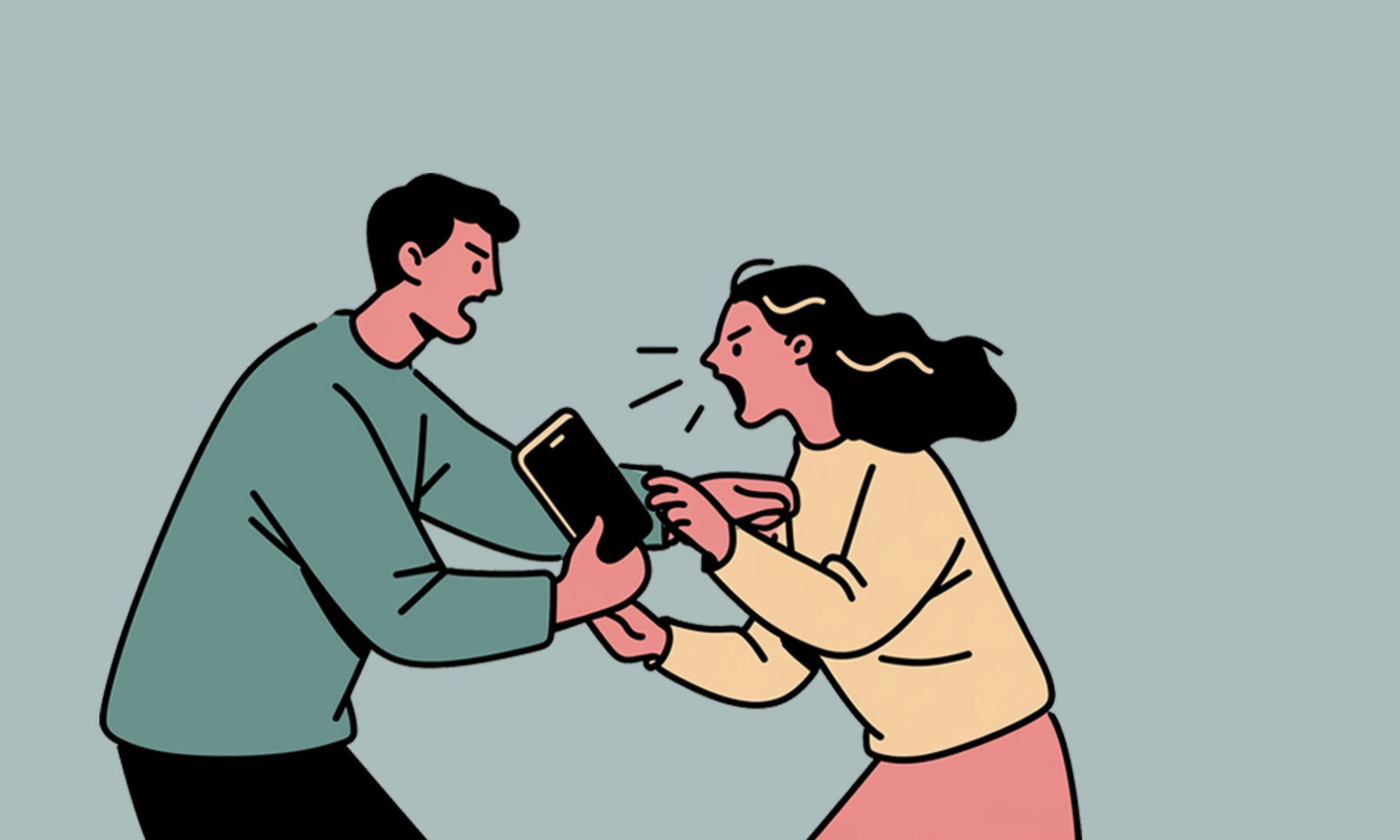
Retroactive Jealousy: those intrusive, relentless thoughts about our partner’s sexual past.
Feeling anxious, resentful, disgusted by what we know. And reacting… demanding more details or pushing our partner away or obsessing about it for hours on end…
A unique form of obsessional anxiety about a past we can’t change.
Often, it’s a form of OCD. But not always. What if these thoughts send us into intense rage? Or a panic attack? Or desolate emotional shutdown?
I’ve worked with people having exactly these reactions to their partner’s past. And they’ve wondered, or someone’s suggested, that they might have BPD – Borderline Personality Disorder.
It’s possible. But what would that mean? Is a diagnosis of BPD helpful? Maybe even essential for people experiencing such intense emotional reactivity?
There’s lots of BPD information out there, and the NHS website is a good place to start.
So I’ll try to keep this relevant to how BPD might show up as retroactive jealousy and the key indicators to watch out for.
The ‘Borderline’ dilemma: imagined fear vs reality
Borderline Personality Disorder in a nutshell: A long-term pattern of significant interpersonal relationship instability, an acute fear of abandonment, and intense emotional outbursts.
If you’re wondering why that word borderline – yes, it’s not the most helpful of labels.
It goes back to 1938 and the early days of psychoanalysis. People were considered ‘on the borderline’ between neurotic (anxious, nervous) and psychotic (getting confused about what’s real and what isn’t).
Neurotic is an outdated term, but retroactive jealousy thinking can certainly seem borderline.
Let’s say that something about my partner’s sexual past makes me uncomfortable. Maybe she told me something she really enjoys in bed…
hmm how did she discover how much she enjoys it? And who with? She wants to do it with me… so she can relive doing it with them? I don’t think so… but I can picture her with that guy, the one who was up for anything… and she’s really enjoying it… I can feel my resentment and anger coming up…
And I end up going through her phone to see if she ever sexted anyone about it. Or I go ahead and ask her. Did you enjoy it more with him?
I’m doing things, saying things, in the real world in response to a completely imagined dilemma.
And it starts to get a bit strange. She says ‘what are you on about!?‘ and I’m thinking ‘ohh denial…‘
A lot of people experiencing RJ will relate to this loop of thinking and reacting. The worry feels real and we need that reassurance.
Is this psychosis? No – we’re confusing ourselves with our imagination.
Is it on the borderline of psychosis? No, not usually – this type of confusion is very common in OCD.
The rollercoaster: splitting, idealisation and abandonment fears
So what might suggest Borderline Personality Disorder? Well, another recognised symptom is splitting.
People with BPD tend to alternate between idealising their partner (putting them on a pedestal) and then devaluing them (feeling disgusted at what they did).
Hmm what does that sound like? Retroactive jealousy.
I speak with people who flip from ‘I’ve never felt more loved‘ to ‘I can’t believe I’m with someone who did that‘ and back again.
Is this BPD splitting? No, not necessarily. It’s our visceral response to whatever emotional lens we’re seeing our partner through in the moment.
People with BPD often have a fear of abandonment or their partner leaving them for someone better.
What does that sound like? A lot like retroactive jealousy.
And worries about our own self-worth too: what does my partner’s past say about me?
With retroactive jealousy, our partner’s past can get very tangled up with our own sense of self and identity. Does this mean we have BPD? No. It’s more likely to mean we have a wobbly or uncertain sense of our own worth or desirability.
The line in the sand: when RJ compulsions become rage and control
For some people, their reaction to thoughts or triggers about their partner’s past feels out of their control.
If we find ourselves raging, screaming, trashing or breaking things that relate to the past, or physically confronting our partner – maybe we’re in BPD territory.
Self-harming, substance abuse or threats of suicide as a way to communicate the intensity of the distress – these are BPD indicators too.
Partner-controlling behaviours can indicate BPD. Demanding to go through a partner’s phone, controlling their social activities, showing up at exes homes or workplaces. Big, big boundary violations.
Retroactive jealousy and OCD can have us doing irrational things, but this is a different league. Retroactive jealousy compulsions feel proportionate in the moment, even if we know we probably shouldn’t do them.
Asking, snooping, monitoring to get more info, to try to get certainty, to feel better. We might not like the things we’re doing, we might know we’re being irrational – but we don’t feel out of control.
What are we trying to achieve? To soothe our own anxiety, to get past these thoughts? OR to hurt or control our partner because we’re so enraged? That can be a useful distinction.
More than just their past: instability, emptiness and pervasive patterns
Some people with BPD report checking out or feeling unreal when confronted with triggers.
Retroactive jealousy can have us going into ourselves and becoming engrossed in thought and worry – but it feels like it has purpose. There’s the distinction again.
People with BPD often say they feel chronic emptiness. Their obsessing feels like it fills a hole.
Less so with retroactive jealousy or OCD. The thoughts and doubts about our partner’s past feel more intrusive and unwanted than filling a hole.
In BPD scenarios, this kind of instability usually shows up in other relationships too: friends, family, work colleagues. The fluctuations between anger and neediness and despair can target anyone in our social circle.
Whereas retroactive jealousy OCD traits show up specifically in our intimate relationships, and specifically around this theme of their past.
Why diagnosis matters: prioritising emotional regulation
If you recognise any of these BPD traits in your own RJ experience, here’s where a diagnosis of BPD can be helpful. It tells you – and your doctor and your therapist – that we need to work on emotional regulation first.
Until we’ve got ways to ride out the intense wave of distress, OCD or relational therapy isn’t going to stick.
And addressing past trauma is usually the next priority. 80-90% of people with BPD say they experienced sexual, physical or emotional abuse in childhood.
And usually, they were invalidated: they were told or made to feel that their emotions were wrong or bad.
I often work on self-soothing and past trauma with people experiencing retroactive jealousy and OCD, but it’s more part of the process. They don’t have that intense emotionality that absolutely requires work upfront.
Note that there can be a genetic element to BPD too. We might have inherited emotional sensitivity. But it’s trauma or toxicity in early life that activates BPD reactions and spirals.
Another benefit of diagnosis: BPD is treated on the NHS in the UK and is often covered by medical insurance.
Hope and healing: why DBT is a game-changer for BPD
Talking of treatment, DBT (gosh all these acronyms, I know) – that’s Dialectical Behaviour Therapy – is especially for BPD. It delivers that emotional regulation work and it gets good outcomes.
I want to emphasise that the majority of people with Borderline Personality Disorder can find relief from these distressing symptoms and recover.
The stats for remission after therapy are actually really positive. DBT and other trauma-informed therapies can make a huge difference.
There’s stigma attached to BPD. Borderline sounds dodgy, a bit scary. And personality disorder sounds kind of permanent.
Yes people with BPD can be a risk to themselves and we have to be mindful of this, but there’s a lot more hope here than most people realise.
BPD is estimated to affect 1-3% of the general population. And kind of unhelpfully, studies suggest 15-25% of people with BPD also meet the criteria for OCD, which is much higher than the general population.
And that’s my main point here. These diagnoses and labels only go so far in terms of usefulness.
I think of retroactive jealousy as a set of symptoms: the thoughts, feelings, reactions we have to triggers about our partner’s past. It could be due to trauma, OCD, BPD, OCPD, attachment injury or a combination of the above.
If you’re experiencing intense, uncontrollable reactivity to thoughts of your partner’s past, that’s what you need to address first. And a BPD diagnosis can really help with that.
This is my take as a psychotherapist who works with anxiety, OCD and retroactive jealousy. Your doctor or GP would be your next call to progress that.
But I hope this helps identify when RJ symptoms are more likely to be OCD or BPD. And whatever the case, there are effective therapy options for both.