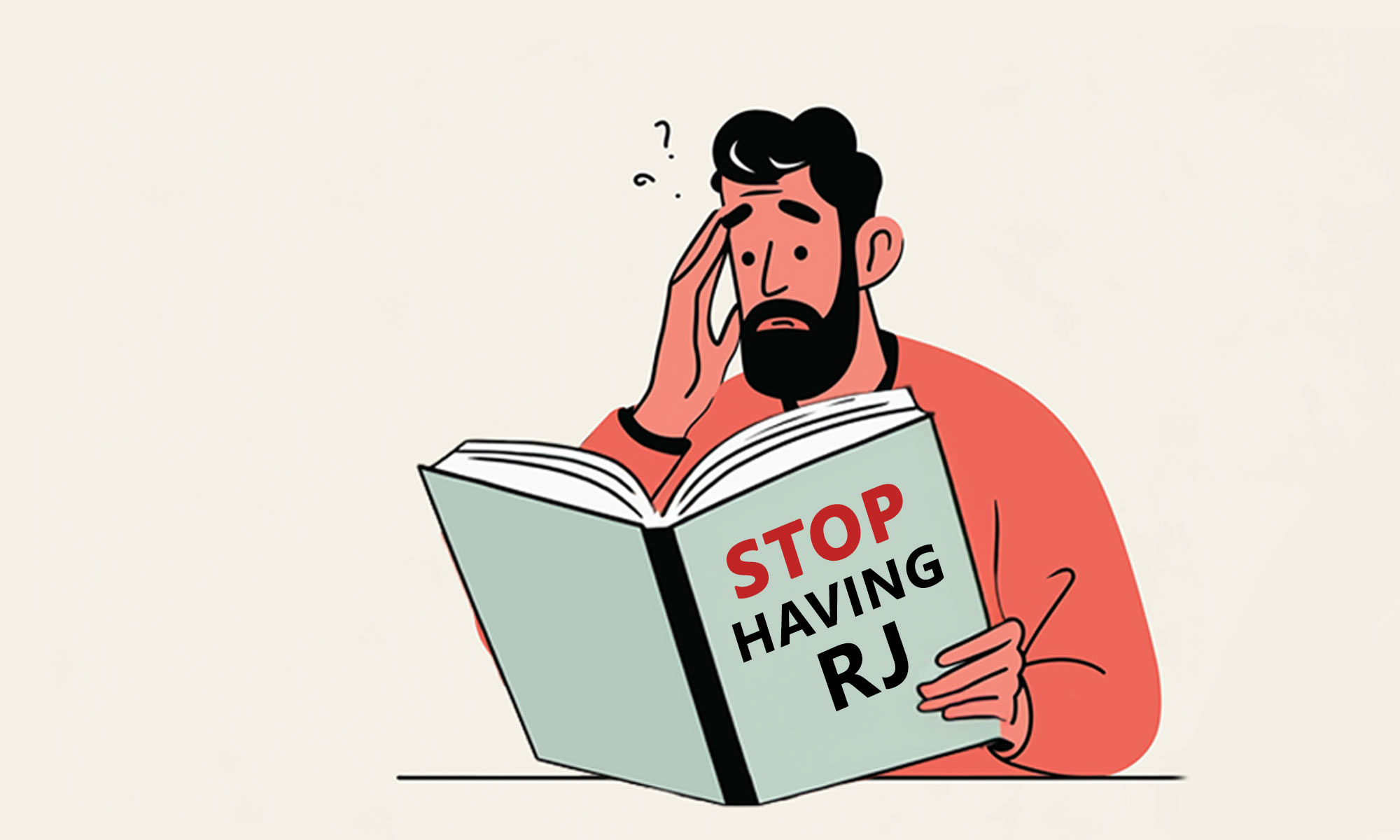
The retroactive jealousy million dollar question: how do we stop thinking about our partner’s past so much?
In other words, how to stop the horrible, exhausting rumination.
We do it to different degrees. Some people say to me “I can go for a good few days, a week maybe, and not really think about it. And then there’s some kind of reminder and – whoosh – my mind locks onto it…“
But what if the thoughts themselves are the reminder? Some people tell me they think about their partner’s past all the time.
“I wake up in the morning and the thoughts are there – hello, good morning, now what about that thing your partner did..?“
Mental images, movies, constant doubt, constantly trying to figure it all out. Sometimes it’s called Pure-O. We’re not outwardly doing anything in response to the thoughts, all the doing is internal.
Some therapists call it megarumination: relentless thinking, all day long.
Maybe we were doing things: asking our partners about the past, going through social media, trying to gather more info, etc. And we’ve stopped doing it. Good – it’s bad for your relationship.
But now these urges feel bottled up, all we’ve got is thinking and rumination. And megarumination.
It keeps looping because we can’t change the past. We can’t change what we know, and knowing more doesn’t help. And the obvious solution of ending the relationship just doesn’t make sense. We don’t want to. So the thinking goes on and on.
We need some sort of intervention to stop all this ruminating: therapy. With a therapist or self-help. Both are valid options.
We need to be able to recognise when we’re ruminating, recognise that it’s going nowhere and stop doing it.
That’s the goal of therapy for retroactive jealousy, OCD and anxiety and depression too: get rumination levels down, spend less time in our head. And we can, I’m here to tell you.
The dilemma: I don’t have the focus
Working with a therapist, reading a self-help book or using an app, it takes some degree of focus. To really get the techniques, to apply them, to persevere.
That’s great. But if I’m a megaruminator, I don’t have focus. I don’t have the bandwidth for all that. I try, I really do, but either:
a) My mind yanks me back into the thoughts all the time. Even with a therapist right there in front of me, it’s all going on in the background.
or b) All these thoughts I’ve been bottling up just spill out in the therapy room. I need to vent and it feels therapeutic. The therapist listens with empathy, but we never get to the therapy.
or c) Therapy and examining why I have these thoughts just stirs them up even more. Rumination latches on to the therapy: ‘this isn’t going to work, you’re just wasting your time, you’re stuck like this…‘. Or megarumination right after a session and I think ‘oh, that made it worse…’
It’s a dilemma. We need to stop ruminating enough – so we have the capacity to learn how to stop ruminating completely.
Here are some suggestions.
1. Stop bottling up: it’s OK for your partner to know
When you’re with your partner, you don’t need to keep your rumination secret. That bottles it up even more.
Yes, your partner can read the room. You’ve had conversations about it; they know you’re ruminating about their sexual past and neither of you feels good about that.
But you being able to say “Dear partner, if I seem a bit weird or distant right now, yes I’m having the thoughts. But it’s on me, I’m working on it, I don’t need to talk about the thoughts“. When you mean it and stick to it, that helps.
Your partner can just acknowledge that. “I hear you, I understand, we know what we’re dealing with here“.
And as long as you are actually doing something about it – therapy or self-help – you feel less alone. A bit calmer, more hopeful. And that helps you both through these moments.
2. Therapeutic distraction and parking intrusive RJ thoughts
Therapists often say listen to music, play a video game, look at some videos, go for a run. Do something to shift your attention away from the thoughts. AKA distraction techniques.
It’s still acting on thoughts, it’s doing something in response to them. It’s not the cure for rumination. But we have to be realistic here.
If a bit of distraction can help break up megarumination and get us in a better place to do the work, we’ll take that. Responding to thoughts is better than reacting to them.
Personally, I think breathing techniques are pretty good: 7-11 breathing or box breathing. Or a mindfulness app. This gives our mind something else to do (counting, visualising) and helps calm our nervous system.
Gym, running, powerlifting – all good too. Exercise gets our attention pointing outwards and alleviates stress.
Distraction works best when we let the thoughts come along for the ride. I’m not trying to get rid of the thoughts, but they’re not going to be the main event in my mind.
Or I’ll come back to the thoughts later; I’m parking them for now while I breathe, exercise or touch grass or whatever.
And the distraction is time limited. 10 minutes of breathing, 20 minutes of gaming, a gym session – not endless scrolling and numbing out.
Therapy gets us to the point where we don’t need distraction techniques. But in the interim, all these activities can help.
3. Is medication right for me? SSRIs for rumination and focus
Yes, it’s an option. An antidepressant medication, usually an SSRI like Sertraline, is often part of a therapy plan. It boosts our serotonin levels and that has a balancing out effect on our autonomic nervous system.
This helps get rumination down. It can help with sleep too, so we’re less exhausted.
Medication isn’t a long-term solution to rumination, retroactive jealousy or OCD. But it can help us engage with therapy. Skills not pills, as we say in the therapy trade. But pills to help us develop our skills? That’s pragmatic.
Talk with your doctor if you’re considering this route, don’t just buy them online. Get a proper prescription and know that there’s an adjustment period, usually the first few weeks, where you might have some side-effects. Do it properly, OK?
4. Working with a therapist? Feedback is essential for effective OCD treatment
If you’re helping yourself, like following a retroactive jealousy or OCD workbook, persist with it. But if it’s not helping or has you ruminating even more, reach out to a therapist. This stuff can be hard on your own.
And likewise if you’re working with a therapist, and you’ve done a few sessions and it’s not helping or you’re ruminating even more, tell your therapist.
A good therapist will know how to keep therapy on track and tailor it to the person in front of them. It’s a collaboration. You might need to do some emotional regulation or past trauma work upfront.
If the therapist is running out of ideas, they might need to refer on to someone with more specific expertise. It goes like that sometimes.
Good therapy works towards a goal. There is a point in OCD therapy where we’ve done the foundation work and we say: no more rumination. You can tell when you’re heading into that rumination bubble. You know how to gently turn yourself around. We’ve worked on that.
If you’re still going in there and ruminating, we can clearly target the reasons why. It’s a process of elimination sometimes. Dr Michael Greenberg has a good protocol for this.
We accept that there’s a messy reality to stopping rumination; the mind has ways of slipping back into it. So give your therapist feedback on what’s going on for you.
The two-phase approach: getting rumination down to overcome RJ
I hope this helps make sense of the two-phase approach that’s often needed when rumination is relentless.
We’ve got to tackle megarumination one way or another and that calls for interim techniques and yes, distractions.
And then we can address the reasons why we’re ruminating. With enough focus, therapy takes us upstream from the rumination, through the bad feelings, and up to the actual doubts that set all this off. That’s where the real target of therapy lies.
That’s how we overcome rumination and retroactive jealousy. One step at a time.
I hope helps with getting started.