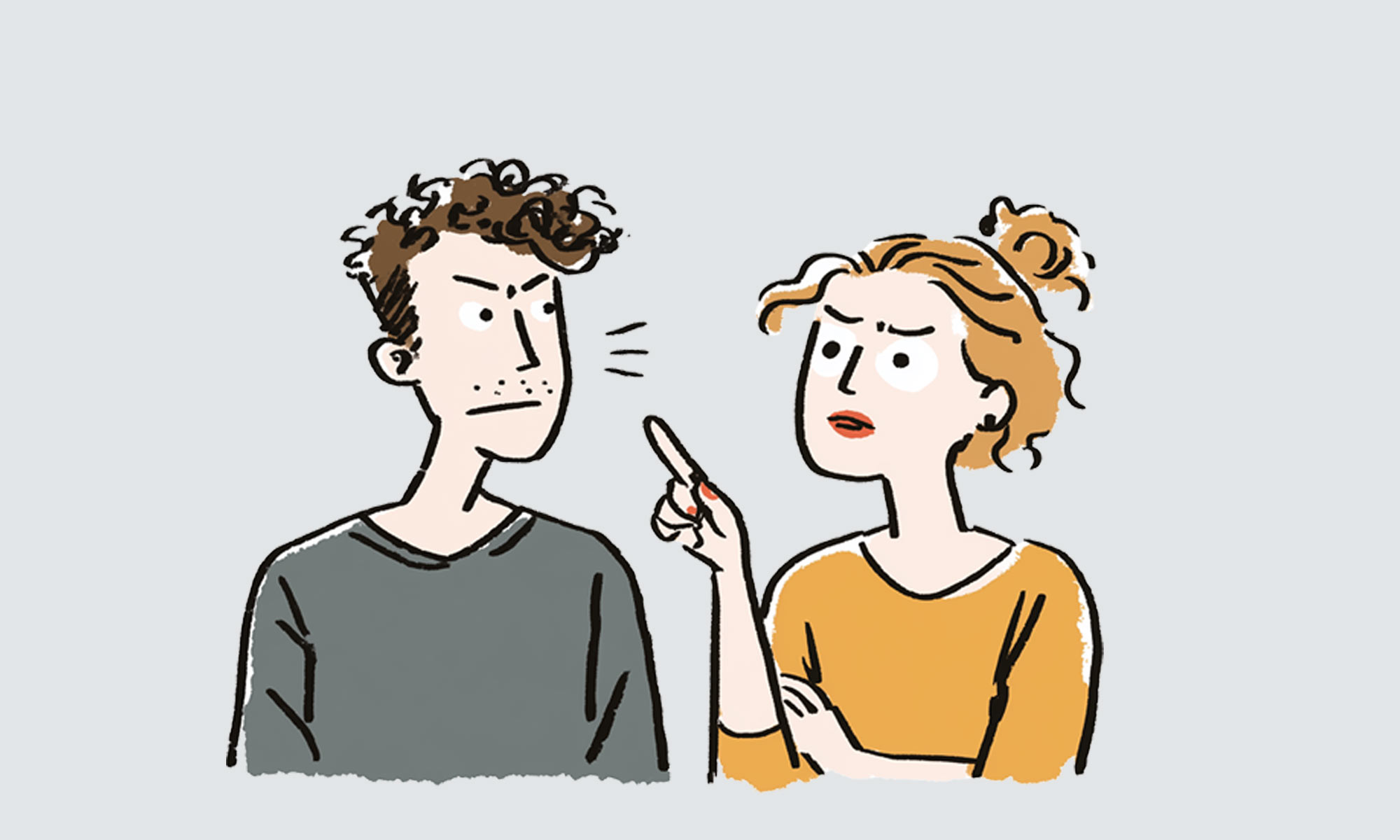
So you struggle with your partner’s past.
Maybe he or she has told you something about their sexual history and it makes you uncomfortable. Or sad, or worried or even angry about it.
It’s in the past. It’s not something they’ve done to you, or done behind your back. But for some reason, it feels as if they have.
It’s your retroactive jealousy
Trying to address these feelings, you look online and you see articles and videos and people like me talking about your retroactive jealousy. Or maybe your OCD or your anxious attachment style.
And you may well think: hang on, my partner did it. Am I being gaslit into thinking it’s all a me thing?
It’s a legitimate question, and one I quite often hear. Sometimes in the comments on my YouTube videos.
You say that I need to stop asking my girlfriend about what happened and get some therapy instead. But if she can give me helpful answers and put my mind at rest (she did it, after all), surely that’s natural? And I should be able to ask?
What would help me a great deal is hearing that my partner rejects the casual sex she had before me.
Both these guys are right about talking with our partners and understanding each other. Couples successfully talk through sexual difficulties all the time.
So why not talk through our worries and feelings about our partner’s past with our partners?
If he or she doesn’t regret it, they don’t need to pretend to. And that’s difficult, I know, when we regret that it happened.
But the lack of apology or satisfying explanation isn’t the problem.
Why no answer will ever be satisfying enough
Here’s the real reason: there is no satisfying explanation.
That’s why discussing your partner’s past doesn’t help.
Retroactive jealousy is obsessional doubt. It loops around in our minds. And more information, or explanation, or apologies – none of it breaks the loop.
At best, it might bring some temporary relief… until the thinking starts over again.
If a few deep conversations about their past resolved the worries once and for all, it wasn’t retroactive jealousy. It wasn’t obsessional doubt.
I speak with couples who’ve had the conversation countless times, over and over. Sometimes lovingly, usually aggressively.
It gets old and it doesn’t help.
The final piece of the puzzle – it doesn’t exist
It’s a trick of obsessional doubt: I just need to ask the right question, get this vital bit of info, the final piece of the puzzle.
Partners fall for it too, with the best of intentions. Ask me anything, they say, and I’ll tell you anything you need to put your mind to rest.
Actually, all this discussion and focus on the past just feeds the doubt. It gives our imagination even more to work with – to visualise, to replay.
And it feeds the doubts about ourselves: this is going on so long, why can’t I shift these feelings about their past? Am I stuck like this? Am I not enough?
A better role for your partner than answering questions
If more information and assurance from our partner doesn’t work, how can your partner help you overcome retroactive jealousy?
By setting respectful and honest boundaries: we both know what this question is, I know how you’re feeling – but I’m not going to keep answering it.
I have a blog post about how couples can work together on this, and another with specific tips for partners.
And as for the work you do, it’s not about forcing yourself to accept, or white-knuckling through difficult feelings. Or being gaslit by anyone into feeling worse.
We have better options than that, via therapy or self-help.
It starts with a bit more understanding. Why does your partner’s past feel so consequential? What’s your narrative about what it means, then and now?
And what does it have you doubting about yourself, now?
When you feel that urge to ask, see if you can spot the final piece of the puzzle trick at work.
Retroactive jealousy is not a problem of not enough information. And you’re not on your own with this either.