OCD is onions, OCPD is garlic
I wrote previously about OCPD, Obsessive Compulsive Personality Disorder, and how it can show up as retroactive jealousy.
We’re talking traits of:
- perfectionism
- being really hot on details
- a need to stay on task and keep working away at things
- fixed views on what’s right and wrong
- a need to control situations or other people
- a need for things to feel ‘right’
In RJ situations, our partner’s intimate past, and how they view it, needs to feel ‘right’ too.
If this resonates with you, here are two OCPD self-help books worth knowing about. Neither of them mentions retroactive jealousy directly, but I think both have a lot to offer.
The OCPD Workbook
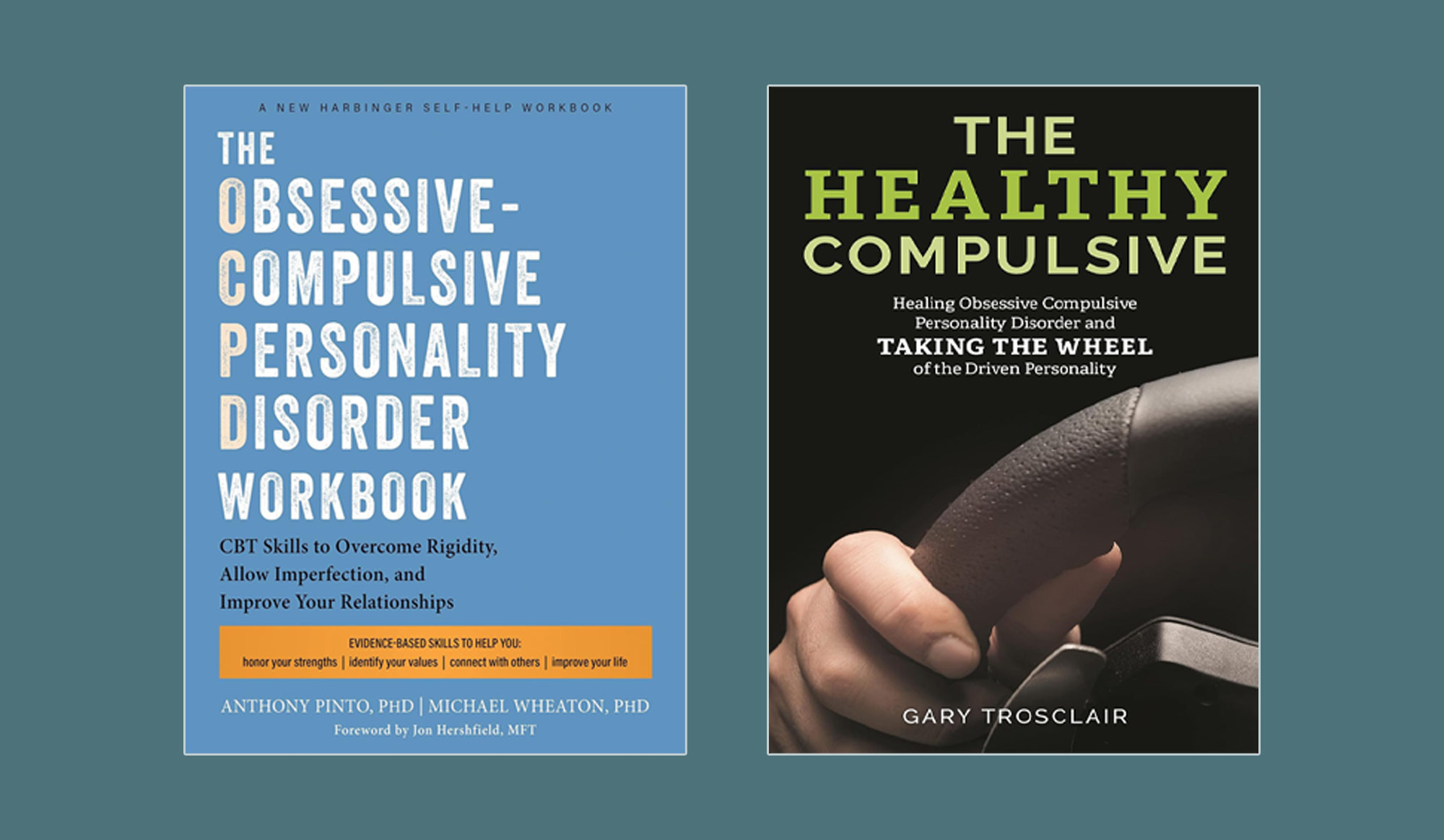
First up, The Obsessive-Compulsive Personality Disorder Workbook by Anthony Pinto and Michael Wheaton.
This is quite new, published in 2026. The authors are psychiatry researchers and teachers who also provide therapy for people with OCPD and OCD.
They talk about OCPD as a set of traits and behaviours rather than a disorder. It’s not about changing who you are at your core. It’s about changing the reactions and routines that keep you from getting where you want to be in life.
The authors point out that OCPD and OCD are quite different. And that’s worth noting because as I’ve discussed in other articles, retroactive jealousy can be a form of OCD too.
They put it this way: OCD symptoms are like chopping onions. Doing it makes us cry, we don’t really want to be doing it. OCPD symptoms are more like eating lots of garlic. We may be fine doing it, but it’s a nightmare for the people around us.
Retroactive jealousy compulsions can be onions or garlic. But “sorry to keep asking, but I’m not happy with that sexual thing you did before you met me, and we need to go over it again“…
That’s the kind of garlic we’re talking about here. I’m bothered by the past thing, but it feels right or necessary to ask about it, to try to ‘fix’ it.
As it says on the cover, this book teaches CBT skills to overcome rigidity, allow imperfection and improve your relationships.
There are plenty of examples and exercises to achieve this: naming the situations and emotions that are most challenging for you, then learning to align your reactions to the situation you’re actually in. Seeing the bigger picture of what you actually want and value.
Rather than falling back on old habits of trying to control the things you can’t control. Or correct things that can’t be corrected – and probably don’t need to be.
One distinction I found really useful: the authors describe two styles of OCPD, anxious and controlling.
Think about typical retroactive jealousy behaviours. Constantly questioning your own judgement, asking for assurance, spending ages deep in the details, maybe criticising yourself for falling short or being like this. That’s the anxious style.
Criticising your partner, demanding explanations, lashing out. That’s more the controlling side.
We might be doing all these things, but our style tends to lean one way or the other. Recognising your style is an essential step.
There are chapters on perfectionism and rigidity too. How both traits can serve us well at work or solving a technical issue. We are rewarded for being this way.
But the same traits can sabotage us at home and in our relationships. Think rumination and constant questions, when what you actually want is peace of mind and a loving relationship.
For partners, The OCPD Workbook offers guidance on supporting someone with these traits. A big part of that, as I’ve said in other videos, is agreeing in advance what you’ll both do or say when the traits show up, and both of you sticking to it.
If I’m to nitpick this book, some people might find it a bit basic. Some exercises are as simple as recognising the emotions you struggle with from a list of words. err anger, frustration, disgust…
But in CBT work, simplicity can be deceptive. We have to go back to basics: what am I actually feeling, and what do I actually want?
Only then can we see how our habitual responses are missing those goals, all while we’re telling ourselves that we’re getting somewhere, or “it’s just the way I am”.
The Healthy Compulsive
Next, The Healthy Compulsive by Gary Trosclair, a psychotherapist who writes and podcasts about OCPD.
Notice that title. Not how to stop being compulsive, but how to be a healthy compulsive. This idea runs right through the book.
Trosclair isn’t a fan of the OCPD label (me neither). He sees it more as a driven personality: a drive to achieve and to get things right, in order, perfect.
He also points out that this drive can serve us well. A lot of people I work with on retroactive jealousy are high achievers who set the bar high and are successful. But it can drive us and our relationships into the ground, or crash them outright.
Or it’s more like gridlock: feeling stuck half-in the relationship, with the dilemma churning away all the time. It’s my values, my principles. I need things to be a certain way, but I can’t change the past. And I don’t want to leave the person I love either.
Trosclair brings a good dose of self-compassion to this. Compulsives are trying to get somewhere better, for themselves and for their partners. A brighter future, feeling intimate and secure. But they get so wrapped up in making it right that they lose sight of the goal.
He also makes a point I found really interesting. Compulsive types don’t tend to be attracted to people just like themselves. They’re drawn to more spontaneous types, with a different kind of energy. As he puts it, “this feels wonderful at first and crazy making down the line.”
And there’s retroactive jealousy. When we find out how our partner rolled with that spontaneous, fun-loving energy before we even knew them.
There’s a great chapter on the emotions that come with OCPD, and it’s not all anger and anxiety. There’s discontent: not allowing ourselves to be happy until everything is fixed.
I see this in RJ a lot. Yes, there’s often an angry, confrontational side, but often a quiet despair and hopelessness too.
And there’s a chapter for partners: changing how you see your partner’s compulsivity, how you communicate, setting boundaries and taking care of yourself. Essential stuff, especially if you’re bearing the brunt of retroactive jealousy.
Now I always have to find a nitpick (I wonder why that is?!). Some of the exercises are a bit confusing. For example, recognising the inner characters in your story, past and present, and then engaging with them emotionally.
Trosclair explains this as simply as he can, but it’s a big and somewhat psychoanalytical ask for a self-help book. I struggled a bit, and I’m a therapist.
Worth reading for retroactive jealousy?
So two quite different books, and we need them. Because OCPD isn’t recognised or discussed enough, at least here in the UK.
Estimates vary, but some research suggests 6% of the population experience OCPD. That’s a lot, that’s more than OCD.
These aren’t the only books on the subject. Psychiatrist Allan Mallinger was writing about it back in the 90s with Too Perfect, and he has a good Substack too.
My recommendation? Start with The OCPD Workbook for the foundations, then read The Healthy Compulsive for more depth and insight.
If you recognise these traits in your work, your friendships and your relationship with your partner and their past, it helps to see retroactive jealousy as part of the bigger pattern of how you relate to the world. And seeing that pattern is where changing it starts.