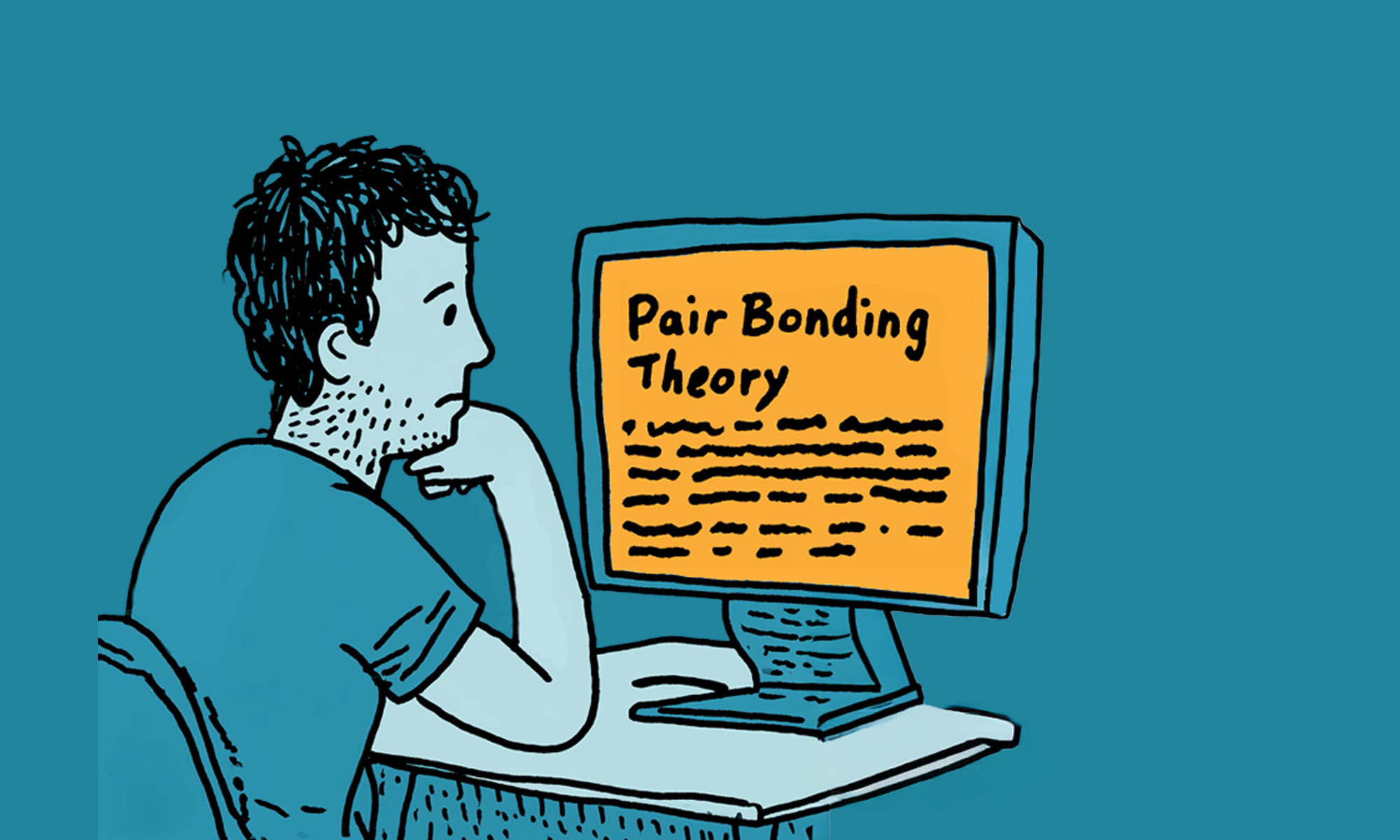
If you’ve experienced retroactive jealousy – some ‘difficulty’ with your wife or girlfriend’s sexual past – you’ve done some online research. Of course you have.
Maybe you’ve read about the advantages women have when it comes to dating and sexual opportunity.
Maybe you’ve come across online communities talking about the unfairness of this. On Reddit perhaps.
And some of what you’ve read feels… relevant. Like it explains something you’ve been feeling but couldn’t quite put into words.
Two guys came to see me recently. Different situations, but similar feelings.
“Every new partner weakens her ability to bond”
The first – let’s call him Marcus – had been with his girlfriend for two years. She’d had a few boyfriends at uni, and a kind of friends-with-benefits thing too. She told him pretty early on. But Marcus couldn’t leave it alone.
He’d read online that every new sexual partner weakens a woman’s ability to pair-bond. That’s not good.
And that casual sex in particular changes something in women. That played on his mind somewhat.
“She settled for someone stable”
The second guy – call him Neil – he’d been married three years with a young son. It’s a good marriage, on the whole.
But Neil found out, almost by accident, that his wife had been on Tinder for a few months just before they got together.
He’d read that women go on apps like that for thrills with bad boys. They give their best to these men, get it out of their system.
And then, they look for someone a bit more stable and less thrilling to settle down with.
Those words ‘settle’ and ‘down’ had burrowed into Neil’s brain. Amongst the mental images of what his wife got up to on Tinder with the bad boys. It didn’t feel good.
Both Marcus and Neil had read factual information. Stated with confidence, often with numbers and stats, and evolutionary psychology explanations.
I’ve read similar things, and I hear them quoted in the therapy room.
When research feels like proof
When I hear such things – I don’t argue with any of it.
It’s tempting to say ‘are those stats actually true?’ or ‘hmm that sounds like… manosphere oversimplification of quite nuanced social science; I’d take that with a pinch of salt if I were you…’. It’s tempting to say it – but it won’t help.
Because the problem isn’t what they’ve read or seen online. It’s what obsessional doubt does with it.
Once we’re in doubt – about something we know or just found out about our partner’s past, and what it says about them – then whatever we read online slips through our filters. It makes impact.
We don’t evaluate it like we would anything else. We don’t weigh it up or consider the source, or question whether it actually applies to the specific woman in our relationship.
It fits with the story already running in our minds.
From research to mental movies
It’s something I see a lot with OCD-type thinking, which is what retroactive jealousy often is.
A doubt, a what if (‘what if she’s too promiscuous… or just settling for me?’) and then reasoning follows.
And that reasoning is already working backwards from the conclusion, finding things that confirm what the doubt already ‘knows’.
That’s not research. That’s turning uncomfortable feelings into evidence. And then the imagination doubles down on it.
Marcus would see something – a mention of freshers week on the TV, a university campus sign, a mate talking about his student days – and it would start. His girlfriend, at university, with this other guy. Vivid. Specific. The whole thing playing out in his mind.
And the claims he’d read would be like captions to this movie: it changed her… it’s my problem now.
His imagination is generating that, fuelled by the doubt and the things he’s read online. And it feels real. It has the emotional weight of something real.
Neil’s version of this was a bit different. He didn’t have the vivid imagery so much – it was a story he kept telling himself about the present.
She settled for me. She wanted excitement and she couldn’t get it long-term so she chose… this. Reliable, stable, he’ll do.
What did he sense and know? His three-year marriage, his son. A woman who, by his own account when he wasn’t in the grip of this, he knew loved him. Who’d built something with him.
But retroactive jealousy overwrites all that with ‘Tinder’ and ‘settled for’.
The real, present, observable relationship – no. The story about her on a dating app – yes, front and centre. Backed up by research, with stats and graphs.
It’s one of the tricks of obsessional doubt. And it’s horribly confusing.
What do we do about this in therapy?
We don’t try to replace manosphere reasoning with different reasoning. We don’t find new facts to prove your partner is trustworthy or the stats don’t apply to her.
That’s getting sucked into the trick. And the doubt will always say ‘but it’s possible, she did it’.
Instead, we look at the reasoning process itself. How did you get from ‘she had a friends-with-benefits at university’ to ‘she is fundamentally incapable of bonding with me’?
What happened in that gap? What else did you doubt, what did you read, what special effects did your imagination add?
In that gap, there’s usually a lot. Old wounds, past relationships, fears about being laughed at or cheated on or always being stuck with this. And the natural discomfort of thinking about our partner’s sexual past, of course.
The online content didn’t create these fears or the discomfort – it just gave us even more to chew on. ‘Research’ that felt like it explained a doubt that was already there.
And when we can see that – really see it, not just intellectually – the claims start to lose their grip. Not because they’ve been disproved. But because you can see the flaws in the reasoning process.
Marcus got there. He still sees things about freshers week and sometimes feels a bit hmmmm. But if his imagination revs up, with headlines about pair-bonding etc, he sees the irrelevance of that.
“It’s like my mind had pulled in bits and pieces from other places in order to generate RJ slop” he said. Can’t argue with the analogy there.
Neil had to sit with something harder: the fact that ‘settled’ had felt true partly because of his own doubts about himself.
That was the work. Not the Tinder app. Not the claims about women online. His own story about his own worth. We can work with that.
What retroactive jealousy actually is
Often around this point, someone posts a comment like: you’re doing men a huge disservice by telling them to stay with reckless and promiscuous women. Don’t listen to him, chaps.
If I was, I would be. But we all have choice and agency.
If you learn something about your partner’s past that genuinely changes how you feel about the relationship, you can end it, of course. That’s your call. Walk away respectfully, but walk away.
That’s not what retroactive jealousy is. It’s staying – because you love this person, because you want this relationship – but rubbing their nose in their past, or rolling around in it yourself.
Not because you want to torment your partner or yourself, but because you’re caught in a loop you can’t find your way out of. A state of horrible confusion, I know.
The online reading is part of that loop and that rolling around in it. It’s natural to go looking for answers, of course it is.
Just be mindful of where you get them from.